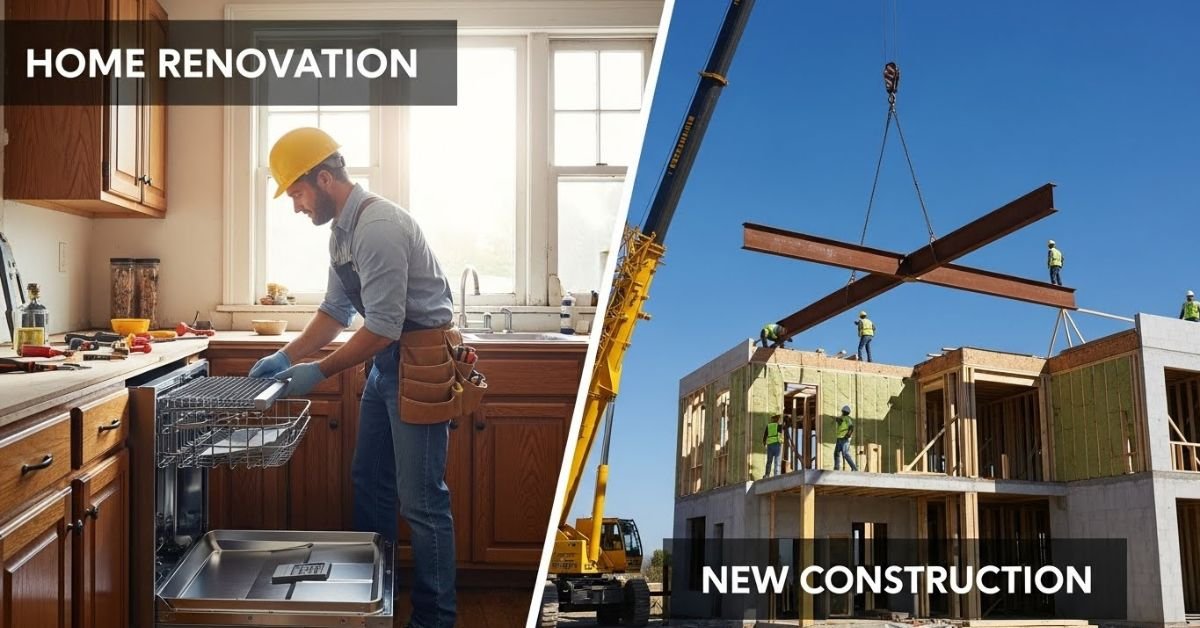
Deciding whether to update your current house or build a new one from the ground up is a major decision. Both home renovation and new construction offer unique paths to getting the home you want, but they come with very different processes, costs, and timelines. Understanding the key differences will help you choose the route that best fits your budget, lifestyle, and long-term goals.
This guide will walk you through the pros and cons of remodeling versus building new. We’ll compare costs, timelines, customization options, and the overall experience so you can make a confident and informed choice for your family.
Contents
What’s the Difference? Renovation vs. New Construction
Before we dive deep, let’s clarify the terms.
A home renovation (or remodeling) involves making changes to an existing structure. This can range from a simple kitchen update to a full-gut remodel where only the home’s “bones” are left. You are working with a pre-existing foundation and framework.
New construction, on the other hand, means building a brand-new house on a plot of land. You start from scratch, from pouring the foundation to installing the last light fixture.
The Case for Home Renovation
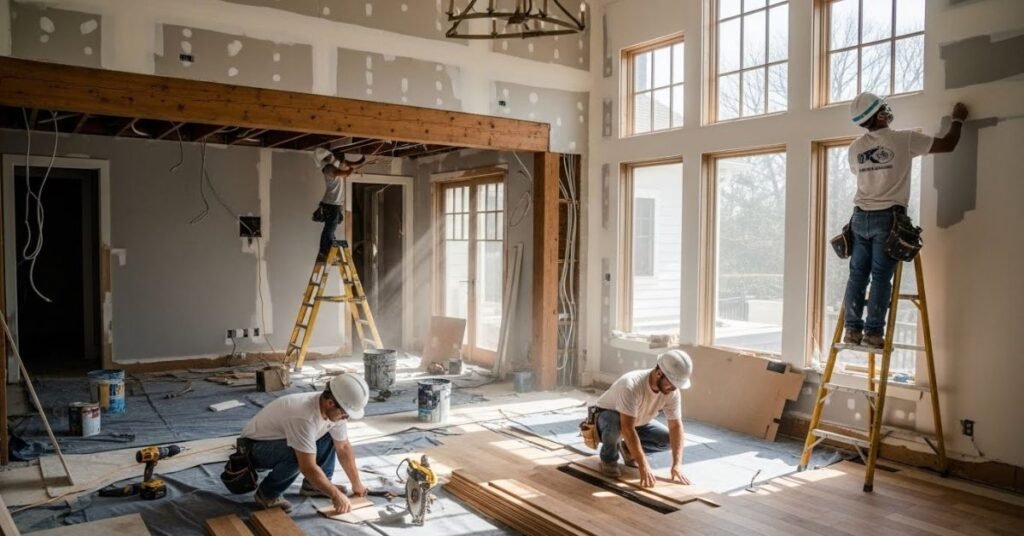
Many people love the idea of transforming their current space. A home renovation can be a great way to improve functionality and aesthetics without the upheaval of moving.
Pros of Renovating Your Home
- Established Location: The biggest advantage is often staying where you are. You already know your neighbors, your school district, and your commute. If you love your community, renovating keeps you there.
- Potentially Lower Initial Cost: Generally, renovating is less expensive than building a new home from scratch, especially for smaller projects. You avoid the significant cost of purchasing land and laying a new foundation.
- Character and Charm: Older homes often have unique architectural details and mature landscaping that can’t be replicated in new builds. A thoughtful renovation can preserve this character while adding modern comforts.
- Faster Timeline: A single-room remodel, like a bathroom, might take a few weeks. A larger-scale renovation could take several months, but this is often still shorter than the 9–12+ months required for new construction.
Cons of Renovating Your Home
- Surprise Issues: The biggest risk with renovating is the unknown. Once you open up walls, you might find unexpected problems like outdated wiring, plumbing issues, asbestos, or structural damage. These surprises can quickly inflate your budget and extend your timeline.
- Design Limitations: You have to work within the existing footprint of the house. Moving load-bearing walls or completely changing the layout can be complex and expensive, if not impossible.
- Living in a Construction Zone: Unless you move out, you’ll be living with dust, noise, and contractors in your space. This can be stressful, especially for families with children or pets.
- Potential for Over-Capitalizing: It’s possible to spend more on a renovation than the value it adds to your home, particularly if you’re in a neighborhood with a lower average home price.
The Case for New Construction
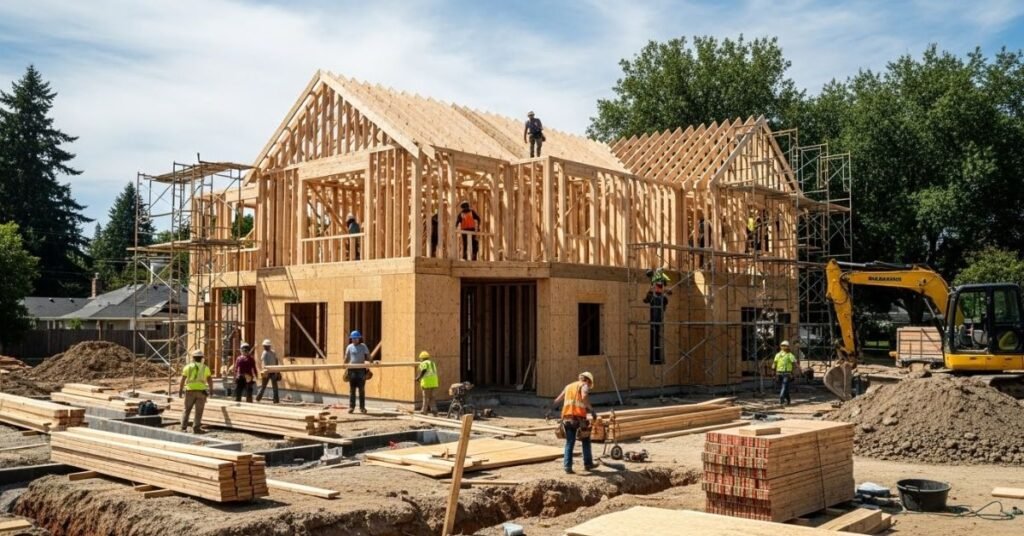
Building a new home is the ultimate opportunity to create a space that is 100% yours. From the floor plan to the doorknobs, every detail is your choice.
Pros of Building a New Home
- Complete Customization: This is the primary draw for new construction. You get to design a floor plan that perfectly suits your lifestyle. Want a first-floor primary suite, a massive walk-in pantry, and a dedicated home office? You can have it all.
- Modern Standards and Efficiency: A new home will be built to the latest building codes, with modern electrical, plumbing, and HVAC systems. This means better energy efficiency, which translates to lower utility bills.
- No Hidden Surprises: With a new build, there are no old-house issues to uncover. Your budget is more predictable because you are starting with a clean slate.
- Low Initial Maintenance: Everything is brand new. You won’t have to worry about replacing the roof, water heater, or major appliances for many years. Many builders also offer a home warranty for the first year or more.
Cons of Building a New Home
- Higher Overall Cost: New construction is typically more expensive. You have to buy the land, pay for permits, connect utilities, and cover the cost of all labor and materials from the ground up.
- Longer Timeline: The process of finding land, designing the home, getting permits, and completing construction can easily take a year or longer. Delays due to weather, supply chain issues, or labor shortages are common.
- Finding Suitable Land: Depending on your desired area, finding an affordable and suitable lot can be a major challenge, especially in developed urban or suburban areas.
- Decision Fatigue: While customization is a pro, it can also be a con. You will have to make hundreds of decisions, from siding color to grout lines. For some, this can become overwhelming.
Cost Comparison: Remodeling vs. Building New
Cost is often the deciding factor. Here’s a breakdown of what to expect.
- Renovation Costs: These vary wildly. A minor kitchen remodel might cost $15,000–$25,000, while a major, down-to-the-studs renovation of a whole house could cost $200,000 or more. A good rule of thumb is to budget an extra 15-20% for unexpected issues.
- New Construction Costs: The average cost to build a new home in the U.S. is around $150 per square foot, but this can range from $100 to over $400 per square foot depending on the location, level of finishes, and complexity of the design. This does not include the cost of the land.
If you’re considering a large-scale renovation, you may want to explore our financing options guide to see how to best fund your project.
How to Choose the Right Path for You?
To make your decision, consider these key questions:
- What is your total budget? Be realistic about what you can afford. This number will quickly tell you if new construction is a viable option. Don’t forget to factor in land costs for a new build and a contingency fund for a renovation.
- Do you love your current location? If your home’s location is perfect, a renovation is likely the better choice. If you’re unhappy with your neighborhood or schools, a new build in a new area might be the answer.
- How much customization do you need? If you just need an updated kitchen and an extra bathroom, a remodel makes sense. If your dream home has a layout that is completely different from your current house, new construction offers more freedom.
- What is your timeline? If you need changes completed within a few months, renovation is your only option. If you have the flexibility to wait a year or more, you can consider building new.
Conclusion:
There is no single “better” option between home renovation and new construction. The right choice depends entirely on your personal situation.
A home renovation is ideal if you love your location, have a structurally sound house, and want to make targeted improvements on a more limited budget and timeline.
A new construction project is the best fit if you prioritize complete customization, want modern energy efficiency, and have a larger budget and a more flexible timeline to build your dream home from scratch.
By carefully weighing the pros, cons, and costs against your own priorities, you can confidently decide whether to improve the home you have or create a brand-new one.