
Hexagon floor tiles, often called hex tiles, have become a staple in modern interior design. These six-sided shapes offer a unique alternative to traditional square and rectangular tiles, bringing geometric interest and a touch of sophistication to any space. Once popular in the early 20th century, they are experiencing a major resurgence, appearing in everything from sleek, modern kitchens to cozy, vintage-inspired bathrooms. Their ability to create dynamic patterns makes them a favorite for homeowners looking to add personality and style to their floors.
This guide will walk you through everything you need to know about hexagon floor tiles. We will explore their benefits, the materials they come in, creative design ideas, and practical tips for installation and maintenance.
Contents
Benefits of Choosing Hexagon Floor Tiles
Why are so many people choosing hexagon tiles for their homes? The appeal goes beyond their unique shape. They offer a combination of practical benefits and design flexibility.
Aesthetic Appeal and Versatility
The most obvious benefit is their striking look. The honeycomb pattern they create is visually engaging and can make a room feel more dynamic. Hexagon tiles work well in a wide range of design aesthetics, from minimalist and contemporary to rustic and bohemian. You can use them to create a subtle, uniform look with a single color or make a bold statement with contrasting colors and intricate patterns.
Durability and Longevity
Like other high-quality tile options, hexagon tiles are built to last. When properly installed and maintained, a hexagon tile floor can withstand heavy foot traffic, spills, and scratches for decades. This makes them an excellent investment for high-use areas like kitchens, bathrooms, and entryways.
Endless Design Possibilities
Hexagon tiles are incredibly versatile. You can mix and match colors to create custom patterns, use different sizes to add visual texture, or transition them into another flooring material like hardwood for a truly unique effect. This flexibility allows you to express your personal style and create a one-of-a-kind space.
Exploring Hexagon Tile Materials
Hexagon tiles are available in several materials, each with its own set of advantages and disadvantages. Choosing the right one depends on your budget, style, and the room where it will be installed.
Ceramic
Ceramic is one of the most common and affordable tile materials. It’s made from clay that is fired at a high temperature, making it durable and easy to clean.
- Pros: Cost-effective, wide range of colors and finishes, easy to cut and install.
- Cons: Less dense than porcelain, can be prone to chipping if something heavy is dropped on it. Best suited for areas with light to moderate traffic.
Porcelain
Porcelain is a denser, less porous, and more durable type of ceramic tile. It’s fired at higher temperatures and made from more refined clay.
- Pros: Extremely durable, resistant to water and stains, suitable for high-traffic areas and even outdoor use.
- Cons: More expensive than ceramic, can be more difficult to cut and install due to its hardness.
Marble and Natural Stone
For a touch of luxury, natural stone tiles like marble, slate, or travertine are an excellent choice. Each tile is unique, with natural veining and color variations.
- Pros: Unmatched elegance, adds significant value to a home, durable with proper care.
- Cons: The most expensive option, porous and requires regular sealing to prevent staining, can be susceptible to scratches and etching from acidic substances.
Creative Design Ideas for Every Room
The versatility of hexagon tiles means they can enhance almost any room in your home. Here are some ideas to inspire you.
In the Bathroom
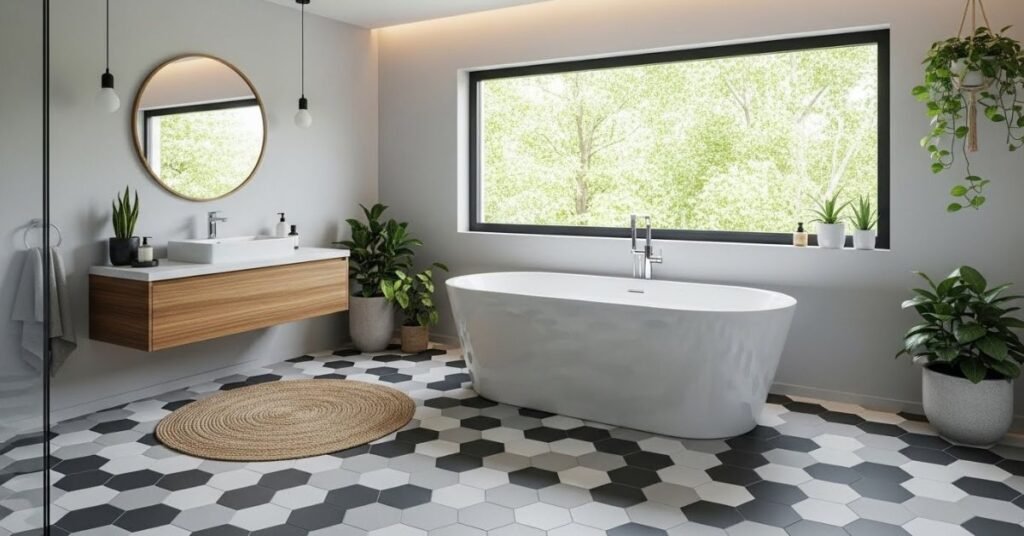
The bathroom is a classic space for hex tiles. Small-format white or black hex tiles can create a timeless, vintage look on the floor. For a more modern feel, consider using large-format hexagon tiles in a bold color or a marble finish. You can also create a stunning feature wall in your shower with a honeycomb pattern.
In the Kitchen
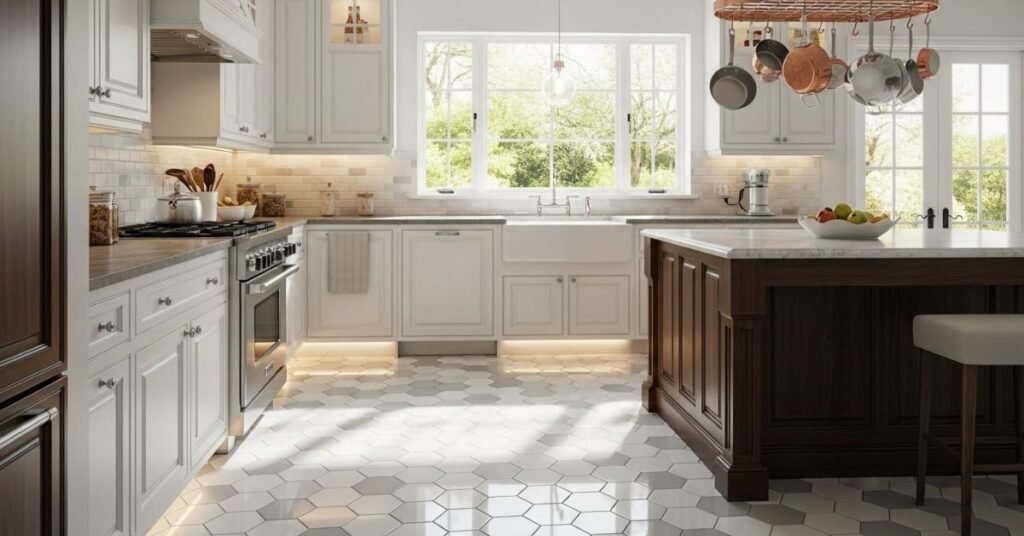
Hexagon tiles make for a durable and stylish kitchen floor. A neutral gray or beige porcelain hex tile provides a great foundation for any kitchen design. You can also use them for a backsplash, creating a fun pattern behind the stove or sink. Consider using a contrasting grout color to make the hexagonal shape pop.
In the Living Room and Entryway
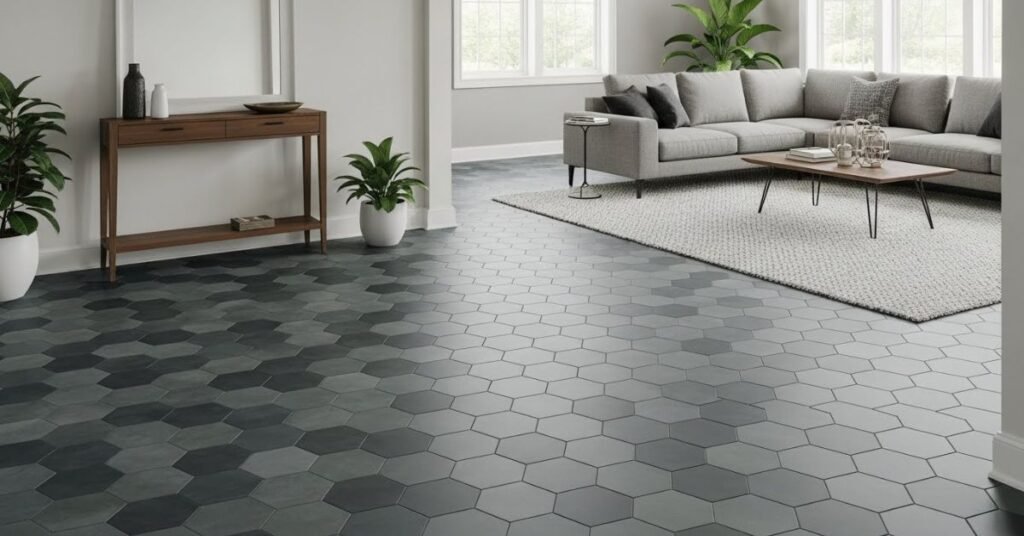
Make a great first impression with a hexagon tile entryway. This is a perfect place for a bold pattern or a beautiful marble hex tile. In some open-concept homes, designers use hexagon tiles to create a “tile rug” effect, defining the entryway or dining space before transitioning to hardwood or another flooring material.
How to Choose the Right Hexagon Tile
With so many options, selecting the perfect tile can feel overwhelming. Consider these factors to narrow down your choices.
Size Matters
Hexagon tiles come in various sizes, from small one-inch mosaics to large 12-inch tiles.
- Small Tiles (1-2 inches): These are great for creating intricate patterns and work well in smaller spaces like bathrooms. They have more grout lines, which can provide extra slip resistance.
- Medium to Large Tiles (4-12 inches): Larger tiles create a cleaner, more contemporary look with fewer grout lines. They can make a small room feel bigger and are perfect for open-plan living areas.
Color and Finish
The color of your tile will have a significant impact on the room’s overall feel. Neutral colors like white, gray, and black are timeless and versatile. Bold colors like navy blue or emerald green can create a dramatic focal point.
The finish is also important.
- Matte Finish: Offers a soft, contemporary look and is less slippery, making it ideal for wet areas like bathrooms.
- Glossy Finish: Reflects light, which can help brighten a dark room. It creates a sleek, polished look but can be slippery when wet.
Installation and Maintenance Tips
Proper installation and care will ensure your hexagon tile floor remains beautiful for years to come.
Installation
While some experienced DIYers may tackle tile installation, the intricate nature of hexagon patterns can be tricky.
- Hire a Professional: For the best results, consider hiring a professional tiler, especially for complex patterns or transitions.
- Grout is Key: The grout color you choose can dramatically change the look. A matching grout creates a subtle, uniform appearance, while a contrasting grout highlights the tile shape.
- Layout Planning: Always do a dry lay of the tiles before you begin setting them with mortar. This helps you visualize the pattern and make any necessary adjustments.
Maintenance
Hexagon tiles are relatively low-maintenance.
- Regular Cleaning: Sweep or vacuum regularly to remove dirt and debris. Mop with a pH-neutral cleaner designed for tile.
- Sealing Grout and Stone: Grout lines should be sealed after installation to prevent staining. Natural stone tiles like marble will require periodic resealing to protect them from moisture and stains.
- Address Spills Promptly: Wipe up spills, especially acidic ones like wine or citrus juice, as quickly as possible to prevent staining or etching, particularly on natural stone.
A Stylish and Lasting Choice
Hexagon floor tiles offer a perfect blend of timeless appeal and modern flair. With their durability, versatility, and wide range of materials, colors, and sizes, they provide endless opportunities to create a stylish and personalized home. Whether you’re aiming for a classic, vintage vibe or a bold, contemporary statement, hexagon tiles are a fantastic choice that will stand the test of time.