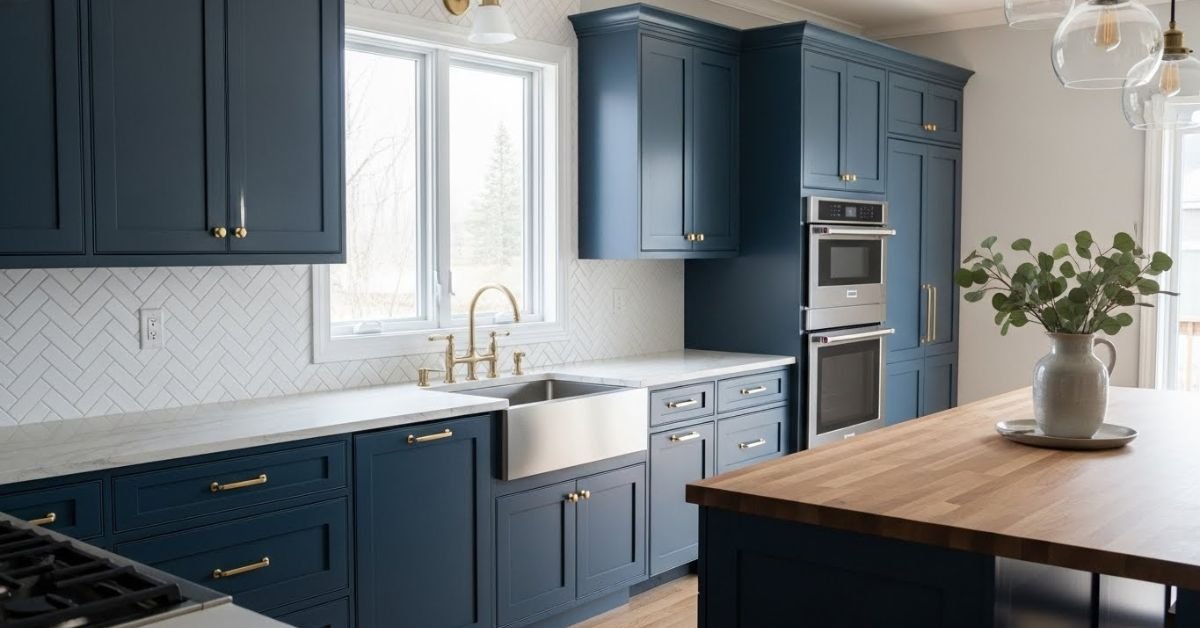
The kitchen has long been the heart of the home, a space for more than just cooking. It’s where families gather, friends connect, and memories are made. For decades, the go-to choices for kitchen cabinetry were safe and predictable: white, cream, or natural wood. These are timeless options, certainly, but a colorful wave has been sweeping through interior design, and one shade, in particular, has captured the imagination of homeowners everywhere: blue. Blue kitchen cabinets have moved from a bold, niche choice to a beloved classic, offering a perfect blend of personality and sophistication. They can be calming, dramatic, cheerful, or elegant, proving that color in the kitchen is not just possible, but powerful.
Contents
- 1 Why Blue Has Become a Kitchen Favorite
- 2 Finding the Perfect Shade of Blue
- 3 Designing Around Blue Cabinets
- 4 Innovative Ways to Use Blue in Your Kitchen
- 5 Conclusion
- 6 Frequently Asked Questions
- 6.1 Will blue kitchen cabinets go out of style?
- 6.2 What is the best countertop color for blue cabinets?
- 6.3 What color hardware looks best with blue cabinets?
- 6.4 Should I choose light blue or dark blue for my kitchen?
- 6.5 Can I paint my existing cabinets blue?
- 6.6 What wall color goes with blue kitchen cabinets?
Why Blue Has Become a Kitchen Favorite
There is a psychological reason behind our attraction to blue. It is a color associated with nature—the sky and the sea. This connection brings a sense of tranquility and stability into our homes. In a bustling, often chaotic space like the kitchen, a calming color can make a world of difference. It can turn a functional room into a sanctuary. Unlike more fleeting trend colors, blue has a timeless quality that prevents it from feeling dated after just a few years. It has the same staying power as a neutral but with far more character.
The versatility of blue is another key factor in its popularity. The spectrum of blue is vast, ranging from the palest, airiest sky blues to the deepest, most dramatic navies. This means there is a shade of blue for every style of home. A soft, gray-blue might be perfect for a coastal cottage or a rustic farmhouse. A rich, saturated royal blue could make a statement in a modern, eclectic space. A dark navy can feel as classic and formal as black, but with a softer, more interesting edge. This adaptability allows homeowners to express their personal style without committing to a color that will be difficult to live with.
Blue also pairs beautifully with a wide variety of other materials and finishes. It looks stunning with the warmth of brass or gold hardware, creating a look that feels both current and classic. It complements the clean, crisp look of chrome or nickel for a more contemporary feel. Blue cabinets work with marble, quartz, or butcher block countertops, and they provide a gorgeous backdrop for stainless steel appliances. This inherent compatibility makes it easy to integrate blue into a new or existing kitchen design.
Finding the Perfect Shade of Blue
Choosing the right shade of blue is the most important step in creating your dream kitchen. The specific hue you select will dramatically influence the overall mood of the space. It is helpful to think about the feeling you want to evoke.
Light and Airy Blues
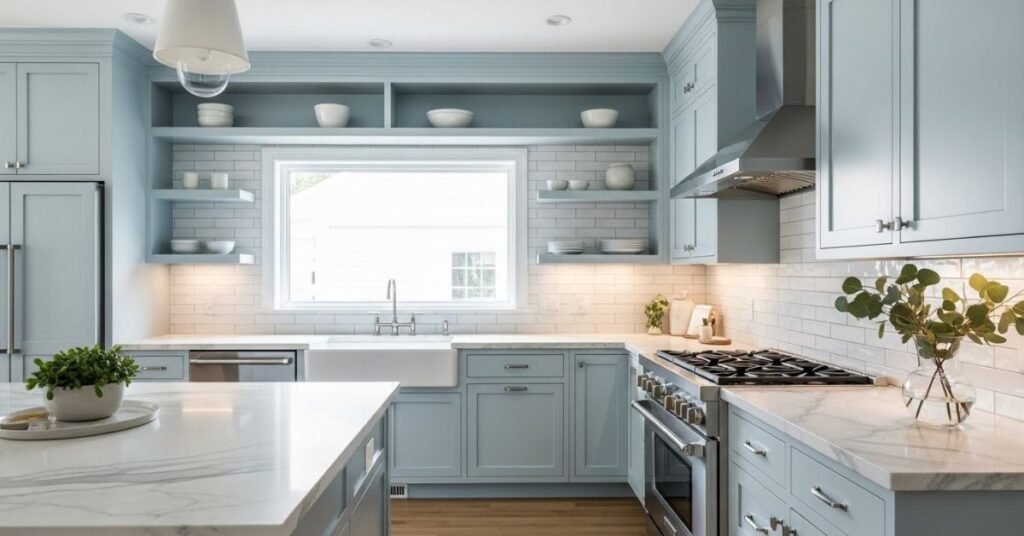
Lighter shades of blue, like sky blue, powder blue, or pale aqua, are excellent for creating a bright and cheerful atmosphere. These colors are particularly effective in smaller kitchens or spaces that lack abundant natural light. A light blue can make a room feel larger and more open. It brings a sense of freshness and calm, reminiscent of a clear day. These softer blues are ideal for farmhouse, coastal, or shabby chic designs. They pair well with white walls, light wood floors, and simple, classic hardware. When using a light blue, you can choose to paint all the cabinets for a cohesive look or just the upper cabinets to draw the eye upward and keep the space feeling open.
Mid-Tone and Saturated Blues
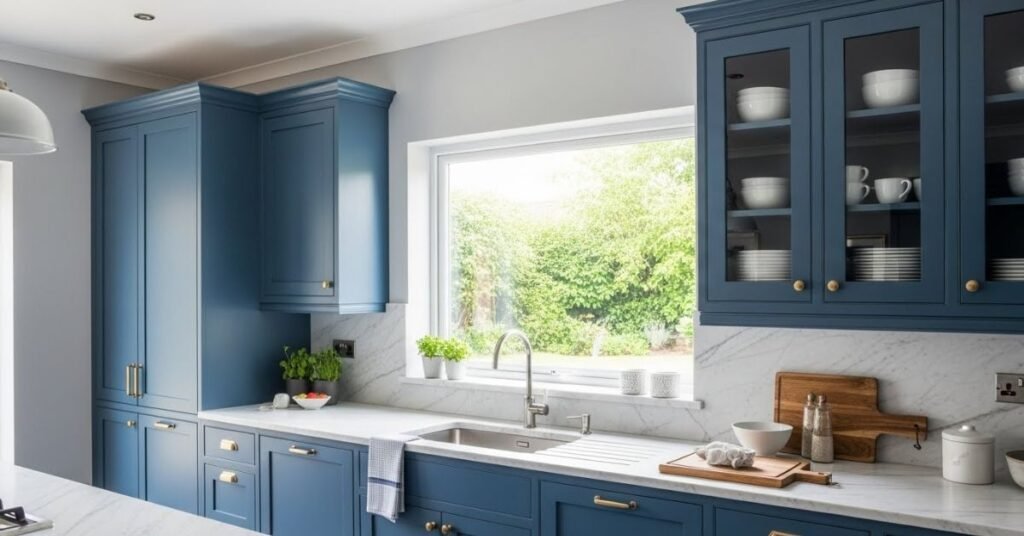
Mid-tone blues, such as cerulean, cornflower, or classic royal blue, make more of a statement. These shades are confident and full of personality. They can be used to inject energy and a bit of playfulness into a kitchen. A saturated blue works well in both modern and traditional settings. In a contemporary kitchen, it can provide a powerful pop of color against minimalist surfaces. In a more traditional space, it can feel regal and sophisticated. These bolder blues are often used on a kitchen island to create a focal point, or on lower cabinets to ground the space while keeping the upper portion of the room light.
Dark and Moody Blues
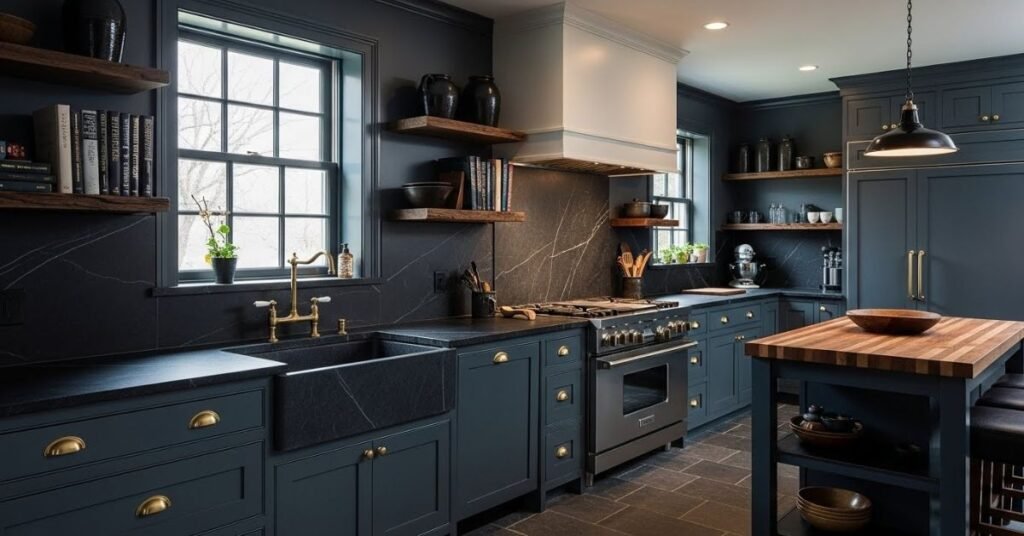
Deep, dark blues like navy, indigo, and midnight blue have become incredibly popular for their ability to create a sense of drama and luxury. These sophisticated shades can make a kitchen feel cozy, intimate, and elegant. Once considered too dark for a kitchen, navy has proven to be a surprisingly versatile neutral. It pairs exceptionally well with warm metallic accents, like brass, which pop against the dark background. Dark blue cabinets can anchor a large, open-plan space, giving the kitchen area a distinct and defined character. To prevent the room from feeling too heavy, it’s wise to balance dark blue cabinets with light-colored countertops, a light backsplash, and good lighting.
Designing Around Blue Cabinets
Once you have chosen your shade, the next step is to build the rest of the kitchen design around it. The surrounding elements will determine whether your blue cabinets feel modern, traditional, or something in between.
Countertops and Backsplashes
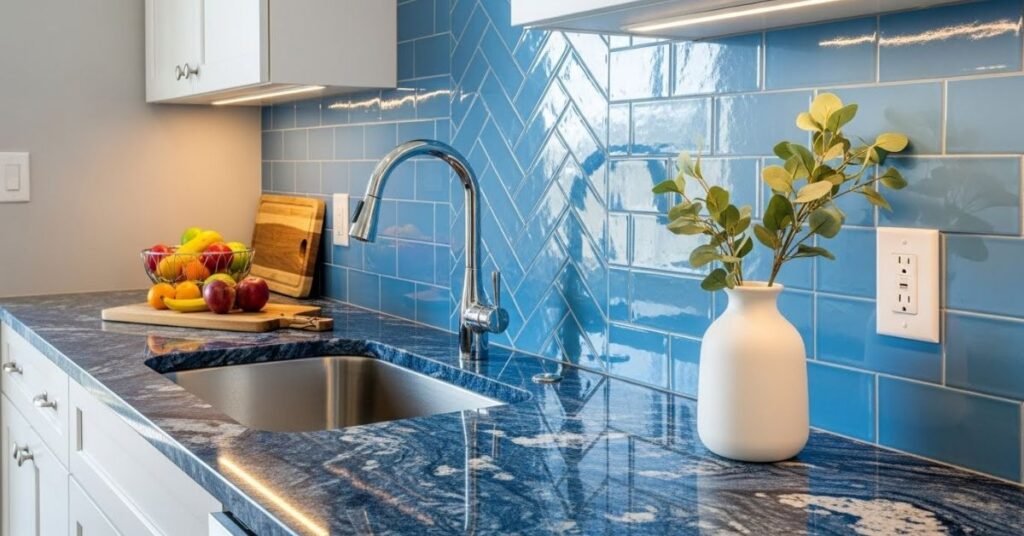
The choice of countertop material has a huge impact on the final look. For a classic, elegant kitchen, a white or light gray marble or quartz with subtle veining is a perfect complement to navy or mid-tone blue cabinets. The cool tones in the stone will harmonize with the blue, creating a sophisticated palette. For a warmer, more rustic feel, a butcher block or other wood countertop can be a beautiful choice, especially with lighter blues. The natural warmth of the wood provides a pleasing contrast to the cool blue.
The backsplash is an opportunity to add texture and personality. A simple white subway tile is a timeless choice that allows the blue cabinets to be the star of the show. For a more modern look, you could use a geometric tile or a single slab of the same material as your countertop for a seamless effect. If you have chosen a more subdued blue, a patterned backsplash can be a great way to introduce another layer of visual interest.
Hardware and Finishes
Hardware is the jewelry of the kitchen. The finish you choose can completely change the vibe. Brass and gold-toned hardware create a warm, luxurious feel when paired with any shade of blue, but they are particularly striking against dark navy. This combination has become a hallmark of modern traditional design. For a more contemporary or industrial look, matte black or polished chrome hardware provides a sleek, cool contrast. If you prefer a more understated, farmhouse style, brushed nickel or even simple wooden knobs can work beautifully with soft, muted blues.
Wall and Floor Colors
The wall color should complement your blue cabinets without competing with them. A crisp, clean white is often the safest and most effective choice. It provides a blank canvas that makes the blue pop. If you want a bit more warmth, a soft cream or a very light greige can also work well. For floors, the options are wide open. Light wood floors keep the space feeling bright and open. Darker wood floors can ground the room and add a sense of richness, especially when paired with deeper blue cabinets. Tile floors in a neutral gray or a classic black-and-white pattern can also provide a stunning foundation for a blue kitchen.
Innovative Ways to Use Blue in Your Kitchen
You do not have to commit to an entire kitchen of blue cabinets to embrace the trend. There are several ways to incorporate this versatile color in smaller, yet impactful, doses.
The Two-Toned Kitchen
The two-toned cabinet trend is a perfect match for blue. A popular approach is to use a dark blue on the lower cabinets and a crisp white on the upper cabinets. This technique grounds the room with color while keeping the upper portion light and airy, which can make the ceiling feel higher. It is a great compromise for those who love the idea of color but are nervous about overwhelming the space. You can also reverse this, using blue on the uppers and white on the lowers, for a more unexpected and modern look.
The Statement Island
Painting just the kitchen island blue is another fantastic way to create a focal point. This adds a powerful dose of color and personality without the commitment of painting every cabinet. It turns the island into a piece of furniture that anchors the room. The rest of the cabinets can remain a neutral white or wood, creating a balanced and interesting design. This is an excellent option for open-concept living spaces where the kitchen island is visible from other rooms.
The Butler’s Pantry or Bar Area
If you have a separate butler’s pantry, bar area, or even just a specific bank of cabinets, painting them blue can create a special, jewel-box effect. Drenching a smaller, adjacent space in a rich, moody blue can create a dramatic contrast with a lighter main kitchen. It defines the area as a distinct zone and adds an element of surprise and sophistication to your home.
Conclusion
Blue kitchen cabinets are more than just a fleeting trend; they are a new classic. They offer a way to step outside the confines of neutral palettes and infuse our homes with color, personality, and emotion. From the palest sky blue that evokes a sense of calm to the deepest navy that exudes luxury, there is a shade of blue to suit every style and every home. Blue provides the perfect balance—it is interesting enough to make a statement but timeless enough to endure.
By carefully selecting your shade and pairing it with complementary materials and finishes, you can create a kitchen that is not only beautiful and functional but also a true reflection of you. It is a choice that promises to bring joy and style to the heart of your home for years to come.
Frequently Asked Questions
Will blue kitchen cabinets go out of style?
It’s unlikely. While specific shades might trend, blue itself is a timeless color rooted in nature. Deeper navies and softer gray-blues, in particular, are now seen as classic neutrals with more personality than white or gray.
What is the best countertop color for blue cabinets?
White and light gray countertops, such as those made of quartz or marble, are the most popular and versatile choice. They create a clean, bright contrast. Warm wood or butcher block countertops also pair beautifully for a more rustic feel.
What color hardware looks best with blue cabinets?
Brass or gold-toned hardware creates a warm, rich look, especially against dark blue. Brushed nickel or chrome offers a cooler, more contemporary feel. Matte black hardware provides a modern, graphic contrast.
Should I choose light blue or dark blue for my kitchen?
Light blue is great for making small or dark kitchens feel bigger and brighter. Dark blue, like navy, creates a dramatic, cozy, and luxurious atmosphere, and works well to anchor a large or open-concept space.
Can I paint my existing cabinets blue?
Yes, painting existing cabinets is a cost-effective way to get the look. The key is proper preparation: cleaning, sanding, and using a high-quality primer and paint designed for cabinetry will ensure a durable, professional-looking finish.
What wall color goes with blue kitchen cabinets?
A crisp white is the most common and effective choice, as it allows the blue to stand out. Soft grays, creams, and other warm off-whites are also excellent options that create a cohesive and inviting space.