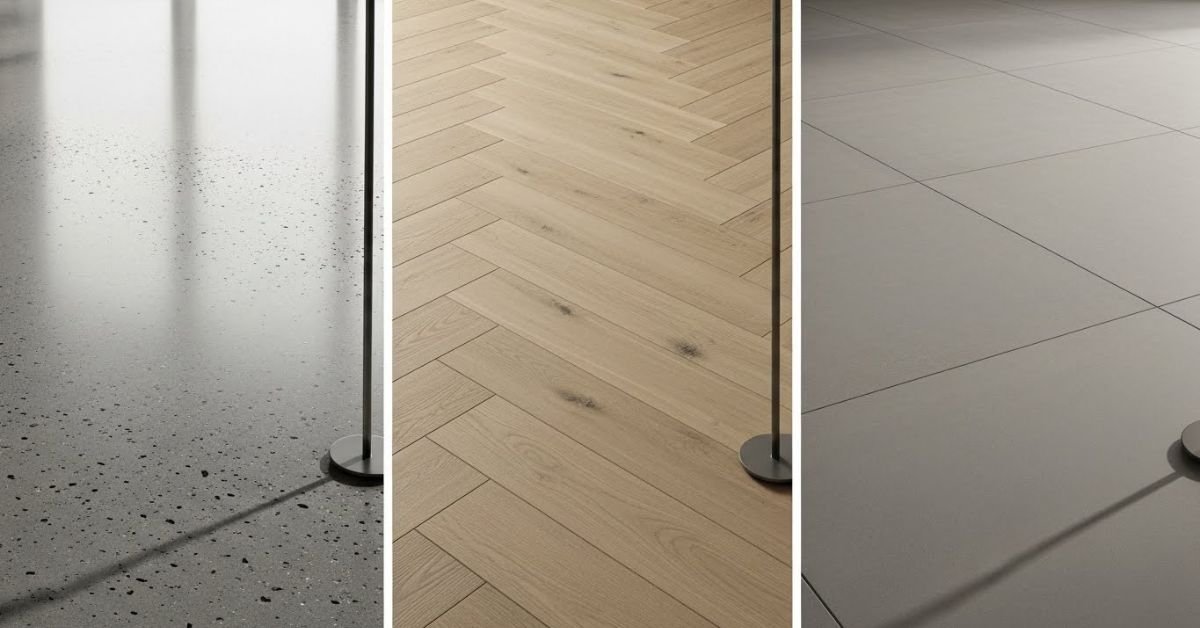
Choosing the right flooring for your home is a big decision. It sets the foundation for your home’s entire look and feel, and it needs to stand up to daily life. With so many options available, finding the perfect balance between modern style, durability, and budget can feel overwhelming. This guide is here to help you navigate the choices and find the best long-lasting flooring for your modern home.
We will explore the top flooring materials that offer both beauty and resilience. From timeless classics to innovative new products, you will get a clear picture of what each option entails, including its pros, cons, and best uses. Let’s find a floor you’ll love for years to come.
Contents
- 1 Understanding Your Flooring Needs
- 2 Hardwood Flooring: The Timeless Classic
- 3 Luxury Vinyl Tile (LVT): The All-Around Performer
- 4 Engineered Hardwood: The Best of Both Worlds
- 5 Polished Concrete: The Ultimate Modern Statement
- 6 Conclusion: Making the Right Choice for Your Home
- 7 Frequently Asked Questions (FAQs)
Understanding Your Flooring Needs
Before diving into specific materials, take a moment to consider your lifestyle and the room you are updating. Ask yourself a few key questions:
- How much foot traffic does this room get? A hallway or entryway needs a more durable floor than a guest bedroom.
- Is the area prone to moisture? Kitchens, bathrooms, and basements require flooring that can handle spills and humidity.
- Do you have pets or children? Look for scratch-resistant and easy-to-clean surfaces.
- What is your budget? Consider both the material cost and the installation expense.
Answering these questions will help you narrow down your options and make a choice that truly fits your household.
Hardwood Flooring: The Timeless Classic
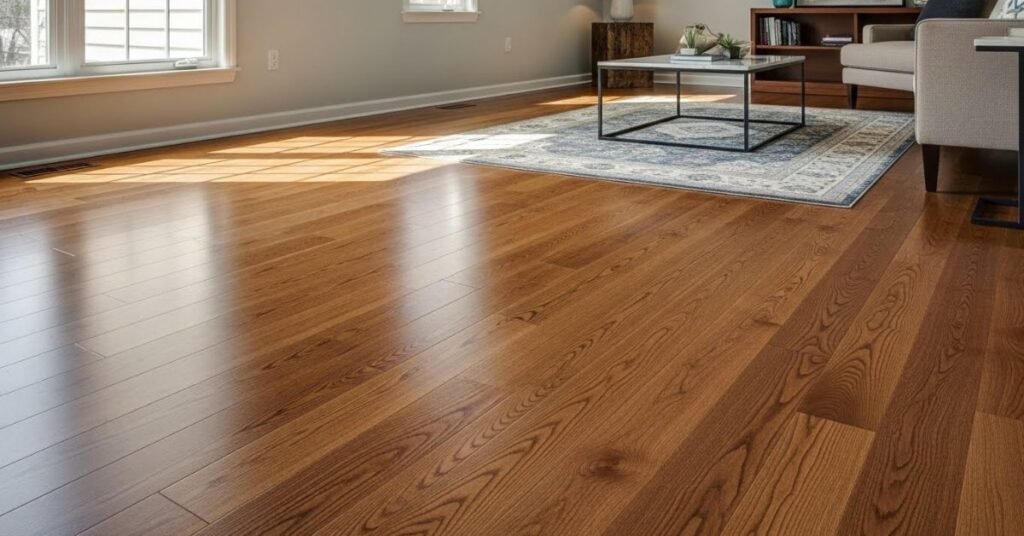
Hardwood floors have been a favorite for centuries, and for good reason. They bring a natural warmth and elegance to any space that never goes out of style. For a modern home, lighter woods like white oak, maple, or ash are popular choices, creating a bright and airy feel.
Pros of Hardwood
- Long-Lasting: With proper care, hardwood floors can last for decades. They can be sanded and refinished multiple times to look brand new again.
- Increases Home Value: Hardwood is a highly desirable feature that can boost your property’s resale value.
- Versatile Style: It complements nearly any decor style, from minimalist to rustic.
Cons of Hardwood
- Susceptible to Scratches: Heavy furniture, pet claws, and high heels can cause dents and scratches.
- Vulnerable to Moisture: Hardwood is not recommended for bathrooms or basements, as it can warp and swell with excess moisture.
- Higher Cost: It is one of the more expensive flooring options, both in material and installation.
Luxury Vinyl Tile (LVT): The All-Around Performer
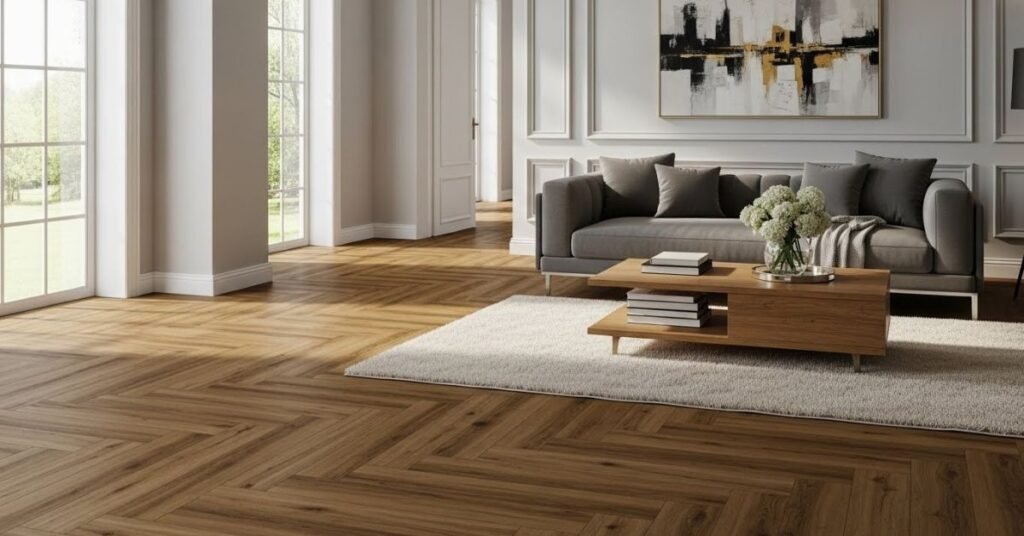
Luxury Vinyl Tile, or LVT, is one of the most popular flooring choices for modern homes. This is not your grandmother’s vinyl flooring. Modern LVT uses advanced 3D printing technology to realistically mimic the look of wood, stone, or ceramic tile. It offers an incredible combination of style, durability, and affordability.
Pros of LVT
- Extremely Durable: LVT is waterproof, scratch-resistant, and stain-resistant, making it perfect for busy households with kids and pets.
- Versatile: It works in any room of the house, including kitchens, bathrooms, and basements.
- Comfortable Underfoot: It’s softer and warmer to walk on than real tile or stone.
- Budget-Friendly: LVT provides a high-end look without the high-end price tag.
Cons of LVT
- Difficult to Repair: While durable, if a plank or tile gets severely damaged, it can be tricky to replace just one piece seamlessly.
- Lower Resale Value: It doesn’t add the same resale value to a home as genuine hardwood.
Real-Life Scenario: Imagine your child spills a glass of juice on the floor. With LVT, you can simply wipe it up without a second thought. On a hardwood floor, that same spill could lead to staining or warping if not cleaned immediately.
Engineered Hardwood: The Best of Both Worlds
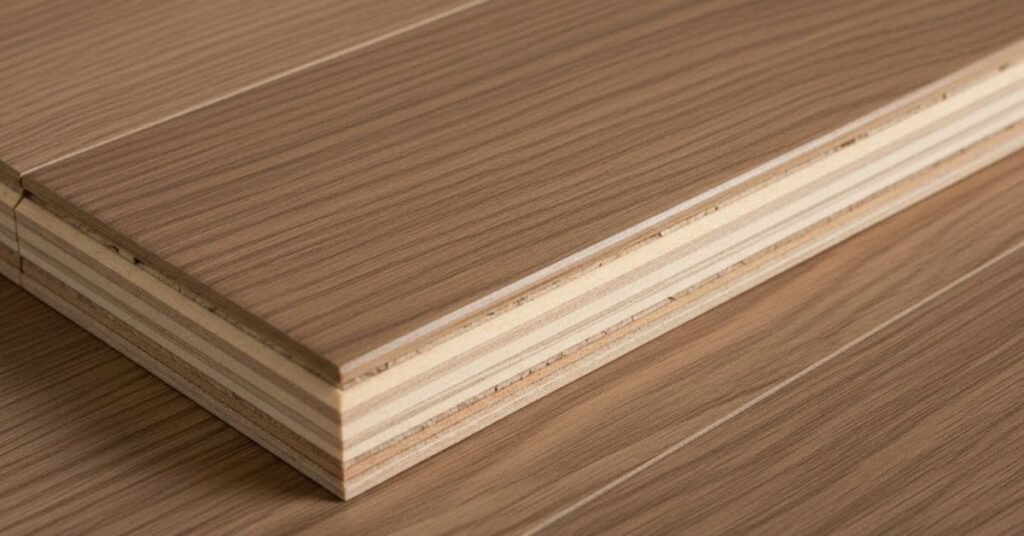
If you’re torn between the beauty of real wood and the need for more stability, engineered hardwood might be the perfect solution. It is constructed with a thin top layer of real hardwood bonded to multiple layers of high-quality plywood. This structure makes it more stable than solid hardwood and less susceptible to changes in temperature and humidity.
Pros of Engineered Hardwood
- Real Wood Look: Since the top layer is genuine wood, it looks and feels just like solid hardwood.
- More Stable: Its multi-layered construction prevents it from expanding and contracting as much as solid wood, making it suitable for basements.
- Installation Flexibility: It can be installed over concrete subfloors, which is often not possible with solid hardwood.
Cons of Engineered Hardwood
- Limited Refinishing: Depending on the thickness of the top wood layer, it can only be sanded and refinished once or twice, unlike solid hardwood.
- Quality Varies: The quality and durability can vary greatly between brands, so it’s important to choose a reputable manufacturer.
Polished Concrete: The Ultimate Modern Statement
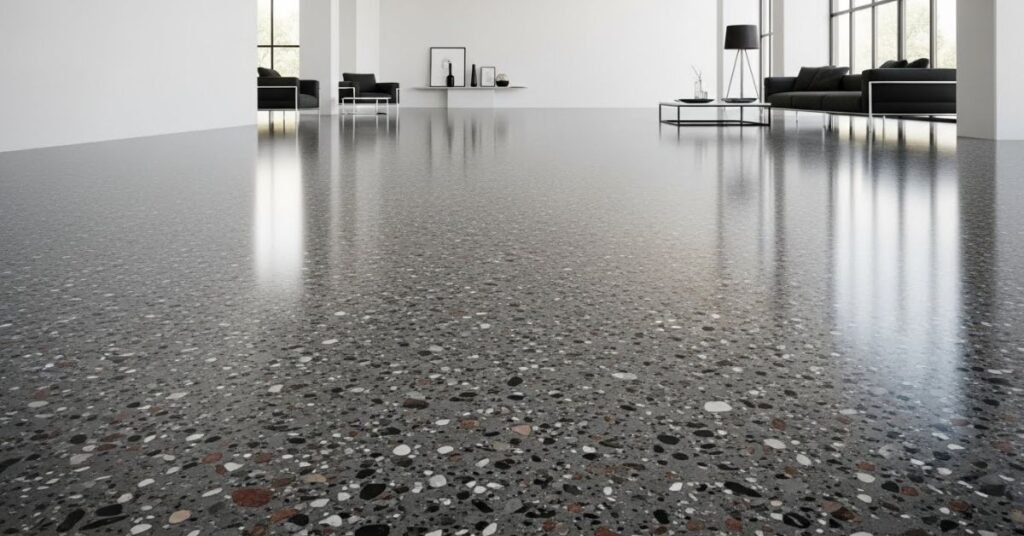
For a truly modern, industrial, or minimalist aesthetic, polished concrete is a standout choice. Once confined to garages and commercial spaces, it has become a chic option for residential interiors. The process involves grinding down a concrete slab to a smooth, high-gloss finish.
Pros of Polished Concrete
- Exceptional Durability: It is incredibly tough and resistant to scratches, stains, and heavy impact. A properly sealed concrete floor is nearly indestructible.
- Low Maintenance: All it needs is occasional mopping with a neutral cleaner.
- Long-Lasting: The floor itself can last a lifetime. It may need to be resealed every few years to maintain its shine and stain resistance.
Cons of Polished Concrete
- Hardness: It is very hard underfoot, which can be uncomfortable for some people. Dropped items are also more likely to break.
- Cold: Concrete does not retain heat well and can feel cold, especially in the winter. This can be offset with area rugs or by installing radiant floor heating.
- Cracking: Over time, concrete can develop minor cracks as a house settles. Some see this as part of its industrial charm, while others may not.
Conclusion: Making the Right Choice for Your Home
Selecting the right flooring is about finding the best fit for your home’s look, your family’s lifestyle, and your budget.
- Hardwood offers timeless beauty and adds significant value, but requires more care.
- Luxury Vinyl Tile (LVT) provides outstanding durability and waterproof performance at an affordable price.
- Engineered Hardwood gives you the authentic look of wood with added stability for more versatile installation.
- Polished Concrete delivers an unmatched modern aesthetic with incredible toughness and low maintenance.
By weighing the pros and cons of these top flooring choices, you can invest confidently in a floor that is both modern and long-lasting, creating a beautiful foundation for your home for many years.
Frequently Asked Questions (FAQs)
1. What is the most durable type of flooring?
For residential use, luxury vinyl tile (LVT) and polished concrete are among the most durable options. They are highly resistant to scratches, water damage, and stains, making them ideal for high-traffic areas and homes with pets and children.
2. Is hardwood flooring a good choice for a modern home?
Absolutely. Modern design often emphasizes natural materials and clean lines. Light-colored hardwoods like white oak, maple, or ash can create a bright, open, and contemporary feel that perfectly aligns with modern aesthetics.
3. Can I install new flooring myself?
Some flooring types, like click-lock LVT, are designed for DIY installation. However, materials like solid hardwood, engineered hardwood, and polished concrete typically require professional installation to ensure a proper fit and long-term performance.
4. How can I make hard floors like concrete or tile feel warmer?
Using large area rugs in living spaces and bedrooms is the easiest way to add warmth and softness. For a more permanent solution, you can install radiant floor heating beneath the flooring material, which provides luxurious, consistent warmth.
5. What is the difference between luxury vinyl tile (LVT) and laminate flooring?
The main difference is their core material. LVT has a solid vinyl core, making it 100% waterproof. Laminate flooring has a fiberboard core, which can swell and get damaged if exposed to moisture. This makes LVT a better choice for kitchens, bathrooms, and basements. [Internal Link Idea: Read our full comparison of LVT vs. Laminate here.]
6. How do I maintain my new floors to make them last?
Regular sweeping or vacuuming to remove dirt and grit is essential for all floor types. Use manufacturer-recommended cleaners and avoid harsh chemicals. Placing felt pads under furniture legs and using doormats at entrances will also help prevent scratches and wear.
7. Is engineered hardwood real wood?
Yes, the top layer of engineered hardwood is real wood. This gives it the authentic look and feel of solid hardwood. The layers underneath are made of plywood or fiberboard, which provides dimensional stability.